
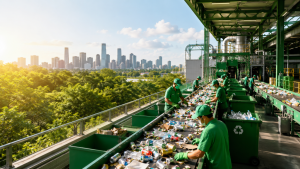
Why Recycling Matters More Than Ever for Businesses, Communities, and the Environment
Recycling has become one of the most effective ways to reduce waste, conserve natural resources, and protect the environment for future generations. As cities continue to grow and consumption increases, the amount of waste generated every day is rising rapidly. Without proper recycling systems, valuable materials are lost while landfills continue to expand, placing additional pressure on ecosystems and public infrastructure.
The importance of recycling extends far beyond simply separating paper, plastic, or glass. Recycling reduces pollution, lowers greenhouse gas emissions, conserves energy, creates employment opportunities, and supports the transition toward a circular economy where valuable materials remain in productive use instead of becoming waste.
At Ghulam Hussain & Sons (GHS), recycling is an important part of our sustainability vision. Through integrated waste management, resource recovery initiatives, environmental awareness programs, and innovative Waste-to-Value solutions, we help organizations and communities reduce waste while maximizing environmental value.
Recycling is the process of collecting, sorting, processing, and converting used materials into new products. Instead of sending valuable materials to landfill, recycling allows paper, plastics, metals, glass, cardboard, and other recyclable materials to re-enter the production cycle.
Modern recycling systems are designed to reduce dependence on raw material extraction while conserving energy and minimizing environmental impacts associated with manufacturing.
Every product manufactured from recycled materials requires fewer natural resources than producing the same product from virgin raw materials. This helps reduce mining, logging, drilling, and other resource-intensive activities that place pressure on the environment.
In addition, recycling reduces the volume of waste sent to landfill sites, extending landfill life while reducing methane emissions generated from decomposing waste.
Businesses looking to improve their recycling performance can benefit from our Solid Waste Treatment & Disposal Solutions that support responsible waste handling and material recovery.
| Benefit | Impact |
|---|---|
| Reduced Landfill Waste | Less waste sent to disposal sites. |
| Resource Conservation | Preserves forests, minerals, and natural resources. |
| Lower Carbon Emissions | Supports climate action through reduced energy use. |
| Cleaner Communities | Reduces litter and environmental pollution. |
Recycling is not only beneficial for the environment—it also creates measurable business value. Organizations that implement structured recycling programs often reduce waste disposal costs, improve operational efficiency, strengthen environmental compliance, and enhance their corporate sustainability profile.
Many companies now integrate recycling into their Environmental, Social, and Governance (ESG) strategies while working toward sustainability certifications and corporate environmental goals.
Our Environmental Consultancy Services help organizations develop practical recycling strategies that align with long-term sustainability objectives.
Communities play an equally important role in successful recycling programs. Households, schools, offices, shopping centers, and public institutions all contribute to recycling success by properly segregating waste and participating in local recycling initiatives.
Public awareness campaigns and environmental education help encourage responsible recycling habits while creating long-term behavioral change that benefits both communities and the environment.
Even the best recycling programs can become less effective when recyclable materials are contaminated or disposed of incorrectly. Small mistakes made during waste segregation can reduce the quality of recyclable materials and increase processing costs.
Creating an effective recycling culture does not require major investments. Small operational improvements can significantly increase recycling rates while reducing overall waste generation.
| Action | Benefit |
|---|---|
| Separate waste at the source | Improves recycling quality. |
| Use labeled recycling bins | Reduces contamination. |
| Educate employees and families | Encourages responsible recycling habits. |
| Schedule regular recycling collection | Maintains efficient waste management. |
| Monitor recycling performance | Identifies opportunities for improvement. |
Pakistan has significant opportunities to improve recycling rates through better waste segregation, investment in recycling infrastructure, and stronger public awareness. Circular economy principles encourage businesses and communities to recover valuable materials rather than treating them as waste.
Projects such as Pakistan’s 1st Zero Waste Recycling Facility demonstrate how innovative recycling systems can recover valuable resources while reducing landfill dependency and supporting environmental sustainability.
Educational initiatives such as our Green Office & Green School Program also help organizations and educational institutions build stronger recycling cultures through awareness and responsible environmental practices.
The future of recycling depends upon collaboration between governments, businesses, educational institutions, industries, and local communities. By making recycling part of everyday operations and daily life, Pakistan can reduce environmental pollution, conserve valuable natural resources, improve public cleanliness, and strengthen its transition toward a circular economy.
Through integrated waste management, recycling initiatives, environmental consultancy, and sustainability-focused solutions, Ghulam Hussain & Sons remains committed to helping businesses and communities build cleaner, greener, and more sustainable environments for future generations.
Whether you manage a business, industrial facility, educational institution, housing society, or public organization, Ghulam Hussain & Sons can help you implement practical recycling solutions that reduce waste and improve environmental sustainability.