
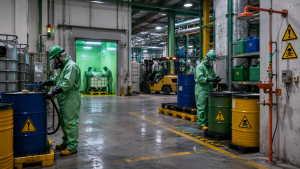
Safe Collection, Transportation & Disposal of Hazardous Waste
Industrial development, healthcare services, manufacturing facilities, laboratories, chemical processing plants, and commercial operations generate hazardous waste that requires specialized handling and disposal. Unlike ordinary municipal waste, hazardous waste contains substances that may pose significant risks to human health, public safety, and the environment if not managed responsibly.
Hazardous waste management in Pakistan has become increasingly important as industries continue to expand and environmental regulations evolve. Proper identification, segregation, storage, transportation, treatment, and disposal help organizations minimize environmental risks while maintaining compliance with applicable environmental standards.
At Ghulam Hussain & Sons (GHS), we provide integrated environmental management solutions that support industries, healthcare facilities, commercial organizations, municipalities, and institutions in managing hazardous waste through safe operational practices and sustainable environmental solutions.
Hazardous waste refers to waste materials that possess characteristics capable of causing harm to people or the environment. These materials may be toxic, corrosive, flammable, reactive, infectious, or chemically hazardous. Without proper management, hazardous waste can contaminate soil, groundwater, air, and surrounding ecosystems.
Improper handling of hazardous waste can result in environmental contamination, occupational health risks, fire hazards, chemical exposure, groundwater pollution, and long-term ecological damage. Hazardous materials should never be mixed with general municipal waste because doing so significantly increases disposal risks and complicates treatment processes.
Professional Solid Waste Treatment & Disposal Solutions help organizations manage hazardous materials responsibly while protecting employees and surrounding communities.
Managing hazardous waste requires a structured process that begins at the point of generation. Organizations should identify hazardous materials, segregate them appropriately, use approved storage containers, maintain accurate records, and ensure transportation is carried out safely by qualified personnel.
A complete hazardous waste management system generally includes:
Organizations can strengthen their environmental performance through Environmental Consultancy Services that support compliance, waste audits, and sustainable waste management planning.
Hazardous waste management is essential for manufacturing industries, chemical plants, pharmaceutical companies, healthcare facilities, energy producers, laboratories, automotive industries, textile manufacturers, and industrial processing facilities. Each sector generates different waste streams that require specialized environmental management solutions.
Through customized environmental services, GHS helps organizations develop practical hazardous waste management strategies that improve operational safety while reducing environmental impacts.
Managing hazardous waste responsibly requires more than simply disposing of unwanted materials. Organizations should implement comprehensive waste management plans, conduct routine inspections, provide employee training, maintain accurate documentation, and regularly review operational procedures to ensure environmental compliance and workplace safety.
Establishing clearly identified storage areas, using approved containers, maintaining emergency response procedures, and performing periodic environmental audits help reduce operational risks while improving sustainability performance.
Organizations seeking to strengthen their hazardous waste management practices can request a Free Waste Assessment to identify practical improvements in waste handling, storage, transportation, and disposal.
| Best Practice | Operational Benefit |
|---|---|
| Waste Identification | Ensures proper classification and handling procedures. |
| Segregation & Labeling | Prevents contamination and improves safety. |
| Secure Storage | Reduces environmental and workplace risks. |
| Approved Transportation | Ensures safe movement of hazardous materials. |
| Employee Training | Improves compliance, safety awareness, and emergency preparedness. |
As Pakistan’s industrial sector continues to expand, hazardous waste management will remain a critical component of environmental protection and responsible business operations. Organizations that invest in safe waste handling systems, environmental compliance, and sustainable operational practices will be better positioned to protect employees, communities, and natural resources while strengthening their environmental performance.
Through integrated waste management services, environmental consultancy, industrial waste solutions, and sustainable environmental practices, Ghulam Hussain & Sons remains committed to helping organizations manage hazardous waste responsibly while contributing to a cleaner, safer, and more sustainable Pakistan.
Whether you operate an industrial facility, healthcare institution, laboratory, manufacturing plant, or commercial business, Ghulam Hussain & Sons can help you implement reliable hazardous waste management solutions that support safety, compliance, and sustainability.