
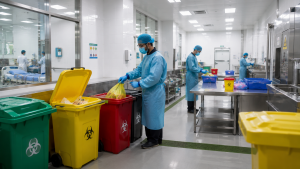
Safe, Compliant & Sustainable Healthcare Waste Disposal Solutions
Healthcare facilities play a vital role in protecting public health, but they also generate significant quantities of medical waste that require specialized handling and disposal. Hospitals, clinics, laboratories, diagnostic centers, blood banks, pharmacies, and healthcare institutions produce infectious waste, sharps, pathological waste, pharmaceutical waste, and other hazardous materials that can pose serious risks to human health and the environment if not managed properly.
Medical waste management in Pakistan has become increasingly important as healthcare infrastructure continues to expand. Proper segregation, collection, transportation, treatment, and final disposal are essential for preventing disease transmission, protecting healthcare workers, ensuring regulatory compliance, and maintaining safe healthcare environments.
At Ghulam Hussain & Sons (GHS), we understand that healthcare waste requires specialized environmental management solutions. With decades of experience delivering environmental services across hospitals, municipalities, industries, and public institutions, GHS supports healthcare organizations through responsible waste collection, transportation, sanitation services, and environmental consultancy.
Medical waste refers to waste generated during the diagnosis, treatment, immunization, or research involving human or animal health. Unlike ordinary municipal waste, medical waste often contains infectious materials or hazardous substances that require specialized management throughout the disposal process.
Improper disposal of healthcare waste can expose healthcare professionals, sanitation workers, patients, and the public to infectious diseases, hazardous chemicals, and contaminated materials. Open dumping or mixing medical waste with general municipal waste significantly increases environmental and public health risks.
Professional Solid Waste Treatment & Disposal Solutions help healthcare facilities establish safer waste handling systems while supporting environmental compliance.
An effective healthcare waste management system follows a structured process beginning at the point of waste generation. Proper segregation ensures that hazardous waste is separated from general waste, reducing treatment costs while improving operational safety.
A complete medical waste management system generally includes:
Healthcare organizations can also benefit from Environmental Consultancy Services to improve waste handling procedures and strengthen environmental compliance.
Professional medical waste management supports a wide range of healthcare organizations, including public hospitals, private hospitals, clinics, laboratories, diagnostic centers, pharmacies, dental clinics, research institutions, and specialized healthcare facilities.
GHS has extensive operational experience supporting healthcare environments, including major institutions such as Mayo Hospital Lahore, Jinnah Hospital Lahore, Lady Willingdon Hospital Lahore, and Pakistan Kidney & Liver Institute, where maintaining hygiene and environmental safety is critical.
Healthcare facilities are expected to maintain high standards of environmental responsibility while complying with applicable waste management regulations. Proper documentation, staff training, routine waste audits, and clearly defined waste handling procedures help healthcare organizations reduce operational risks and maintain safe working environments.
Professional environmental management also supports infection prevention by ensuring that hazardous healthcare waste is separated, transported, treated, and disposed of using approved methods. This reduces the likelihood of cross-contamination while protecting patients, healthcare professionals, sanitation workers, and nearby communities.
Organizations looking to improve environmental performance can request a Free Waste Assessment to identify opportunities for improving waste segregation, collection efficiency, and environmental compliance.
| Best Practice | Benefit |
|---|---|
| Segregation at Source | Prevents hazardous waste from mixing with general waste. |
| Color-Coded Containers | Improves handling safety and operational efficiency. |
| Secure Transportation | Minimizes exposure risks during collection and disposal. |
| Approved Treatment | Protects public health and supports environmental compliance. |
| Staff Training | Reduces operational errors and improves workplace safety. |
Pakistan’s healthcare sector continues to grow rapidly, increasing the importance of professional medical waste management services. Healthcare organizations must invest in sustainable waste handling systems that protect people, preserve the environment, and comply with evolving environmental standards.
Through integrated environmental services, waste collection, sanitation support, environmental consultancy, and sustainable waste treatment solutions, Ghulam Hussain & Sons remains committed to helping healthcare organizations manage medical waste responsibly while protecting communities and supporting long-term environmental sustainability.
Whether you operate a hospital, clinic, laboratory, diagnostic center, or healthcare facility, our environmental experts can help you develop safe, compliant, and sustainable medical waste management solutions tailored to your operations.