
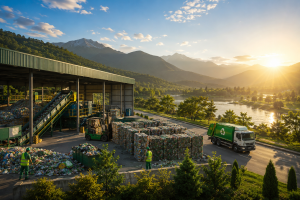
Addressing Climate Change Through Sustainable Waste Management
Climate change is one of the defining challenges of our time. Rising temperatures, extreme weather events, environmental degradation, and increasing pressure on natural resources are affecting communities across the globe.
While climate change is often associated with energy production and industrial emissions, waste management also plays a significant role in greenhouse gas generation. Organic waste disposed of in landfills produces methane, a greenhouse gas significantly more potent than carbon dioxide.
Improving waste management systems therefore represents an important opportunity for climate action.
At Ghulam Hussain & Sons, we recognize the important connection between waste management and climate resilience. Through responsible waste collection, recycling, resource recovery, and landfill diversion initiatives, GHS contributes towards reducing environmental impacts associated with waste disposal.
Every tonne of waste diverted from landfill contributes towards reducing greenhouse gas emissions.
Recycling materials such as paper, plastics, metals, and cardboard reduces the need for virgin resource extraction and manufacturing, resulting in lower overall carbon emissions.
Similarly, composting and organic waste management reduce methane generation from landfill sites while producing beneficial soil products.
These principles form the foundation of GHS’s sustainability strategy.
Through Solid Waste Management Solutions and resource recovery initiatives, waste can be managed more efficiently while reducing environmental impacts.
Climate Benefits of Sustainable Waste Management
✔ Reduced landfill dependency
✔ Lower methane emissions
✔ Increased recycling rates
✔ Resource conservation
✔ Reduced carbon footprint
Recognizing the growing importance of climate action, GHS has established its Sustainability & Carbon Solutions Division to support organizations in identifying environmental improvement opportunities and developing sustainability-focused strategies.
The division explores opportunities related to:
✔ Carbon footprint reduction
✔ Waste diversion projects
✔ Circular economy initiatives
✔ Resource recovery systems
✔ Sustainability reporting
✔ Carbon market opportunities
As carbon markets continue to develop globally, waste management projects are increasingly recognized as valuable contributors to emissions reduction efforts.
Organizations seeking long-term environmental planning can benefit from Environmental Consultancy Services that support sustainability-focused decision-making.
The impacts of climate change are already visible across Pakistan through flooding, landslides, changing weather patterns, and environmental degradation.
Operations in environmentally sensitive regions such as Murree have reinforced the importance of maintaining clean drainage systems, preventing waste accumulation, and protecting natural ecosystems from pollution.
Through these efforts, GHS contributes not only to emissions reduction but also to broader climate adaptation and resilience objectives.
Climate action requires collaboration between governments, businesses, communities, and environmental organizations.
Through sustainability-focused operations, Waste-to-Value initiatives, recycling programs, and carbon solutions development, GHS remains committed to supporting Pakistan’s climate goals and contributing towards a lower-carbon future.
Initiatives focused on circular economy solutions and resource recovery will continue to play an important role in achieving long-term climate objectives.