
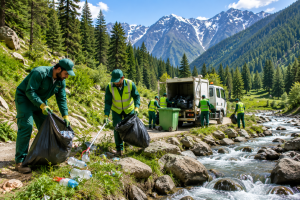
Protecting Ecosystems Through Responsible Environmental Management
Healthy terrestrial ecosystems form the foundation of sustainable development. Forests, mountains, grasslands, wildlife habitats, and natural landscapes provide essential ecological services that support biodiversity, regulate climate, protect water resources, and sustain human livelihoods. However, rapid urbanization, environmental degradation, deforestation, improper waste disposal, and unsustainable land use practices continue to place significant pressure on these ecosystems.
The United Nations Sustainable Development Goal 15 seeks to protect, restore, and promote sustainable use of terrestrial ecosystems while combating land degradation and biodiversity loss.
For environmental service providers such as Ghulam Hussain & Sons (GHS), this goal is closely linked to our core mission of protecting the environment through responsible waste management, environmental stewardship, and sustainability-focused operations.
Improperly managed waste poses a direct threat to terrestrial ecosystems. Open dumping, littering, illegal disposal of waste, and uncontrolled landfill practices can contaminate soil, damage vegetation, impact wildlife habitats, and degrade natural landscapes.
Across many developing regions, waste frequently accumulates in forests, open lands, water channels, and environmentally sensitive areas due to inadequate collection and disposal systems. These impacts extend far beyond aesthetics, affecting biodiversity, ecosystem health, and long-term environmental sustainability.
Responsible waste management therefore plays an important role in protecting land resources and preserving natural ecosystems.
Learn more about Solid Waste Management Solutions that support environmental protection and sustainable waste handling.
One of the most significant examples of GHS’s contribution towards SDG 15 can be seen through our operations in Murree District and Kotli Sattian under the Government of Punjab’s Suthra Punjab Initiative.
These regions contain environmentally sensitive mountain ecosystems, forests, natural water channels, and biodiversity-rich landscapes that require special environmental protection measures.
Managing waste in such areas presents unique challenges. Scattered settlements, difficult terrain, tourism pressure, and long transportation routes increase the risk of environmental contamination if waste is not managed properly.
Through structured waste collection systems, transfer station management, secondary transportation, highway cleaning operations, and public awareness initiatives, GHS helps protect these natural environments from the adverse impacts of waste pollution.
Environmental protection extends beyond waste collection.
GHS actively supports afforestation and environmental restoration efforts through Tree Plantation Programs across multiple operational regions. To date, GHS has contributed towards the plantation of more than 20,000 trees, helping improve green cover, support biodiversity, enhance urban environments, and contribute towards climate resilience.
Tree plantation initiatives not only improve environmental conditions but also support soil conservation, carbon sequestration, and ecosystem restoration.
Long-term environmental protection requires public participation.
GHS actively engages schools, communities, and institutions through Environmental Awareness Programs aimed at promoting responsible waste management and environmental stewardship.
Through initiatives such as the WWF Pakistan AMAL Recycling Program and awareness campaigns conducted in over 500 educational institutions, GHS encourages future generations to become active participants in protecting the natural environment.
As environmental pressures continue to increase, the protection of terrestrial ecosystems will require stronger collaboration between governments, businesses, communities, and environmental organizations.
Through responsible waste management, environmental awareness, tree plantation initiatives, and sustainability-focused operations, Ghulam Hussain & Sons remains committed to supporting the objectives of SDG 15 and contributing towards a cleaner, greener, and more sustainable Pakistan.
Through investments in Environmental Consultancy Services and sustainability-focused initiatives, GHS continues to strengthen its contribution toward ecosystem protection and environmental stewardship.