
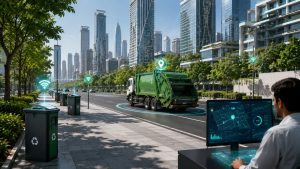
How Digital Innovation Is Making Waste Collection More Efficient, Sustainable, and Reliable
Cities around the world are embracing digital technologies to improve public services, enhance operational efficiency, and build more sustainable communities. Waste management is one of the sectors experiencing the greatest transformation through smart technologies. From GPS-enabled collection vehicles to IoT sensors, GIS mapping, route optimization, and real-time performance monitoring, technology is helping municipalities deliver cleaner, faster, and more efficient waste management services.
As Pakistan’s urban population continues to grow, traditional waste management systems alone are no longer sufficient to meet increasing demands. Smart waste management provides municipalities, industries, housing societies, and commercial organizations with innovative solutions that improve service quality while reducing operational costs and environmental impacts.
For over five decades, Ghulam Hussain & Sons (GHS) has continued to adopt innovative technologies that strengthen environmental management through GPS fleet monitoring, GIS mapping, digital attendance systems, performance dashboards, route optimization, and sustainability-focused operational planning.
Smart waste management refers to the use of digital technologies to improve the collection, transportation, monitoring, recycling, and overall management of waste. Rather than relying solely on manual processes, smart systems collect real-time information that helps organizations make faster, more accurate operational decisions.
These technologies improve efficiency while reducing unnecessary vehicle movements, fuel consumption, missed collections, and operational costs.
Rapid urbanization places increasing pressure on municipal services. Growing populations generate more waste while expanding road networks, commercial districts, and residential communities make collection operations increasingly complex.
Smart technologies allow municipalities to improve service quality without proportionally increasing operational costs by using data to optimize daily waste management activities.
Professional Solid Waste Management Services supported by digital technologies create cleaner, more responsive, and environmentally sustainable communities.
| Technology | Benefit |
|---|---|
| GPS Fleet Tracking | Improves route visibility and operational efficiency. |
| GIS Mapping | Supports better planning and resource allocation. |
| IoT Smart Bins | Enables collection based on fill levels. |
| Digital Reporting | Improves accountability and transparency. |
| Performance Dashboards | Supports real-time operational monitoring. |
Optimized waste collection routes reduce fuel consumption, vehicle emissions, and unnecessary travel distances. Improved recycling systems and digital monitoring also reduce landfill dependency while increasing resource recovery and supporting sustainability goals.
Organizations seeking to modernize environmental operations can benefit from our Environmental Consultancy Services to implement smarter waste management strategies.
Municipal authorities increasingly rely on digital monitoring systems to improve service delivery, respond to citizen complaints, optimize workforce deployment, and strengthen environmental accountability. Smart waste management creates a foundation for cleaner, healthier, and more resilient cities.
GHS integrates technology into its operations to improve efficiency while delivering reliable environmental services that support sustainable urban development across Pakistan.
Artificial Intelligence (AI) is becoming an increasingly valuable tool in modern waste management. By analyzing operational data, AI can help predict waste generation trends, optimize collection schedules, improve route planning, and support better resource allocation. Data-driven insights enable municipalities and organizations to make informed decisions that improve service quality while reducing operational costs.
As smart city initiatives continue to evolve, AI will play an even greater role in building efficient and environmentally responsible waste management systems.
Technology also improves communication between municipalities and citizens. Digital complaint management systems, mobile applications, online service requests, and public awareness platforms make it easier for residents to report issues, access environmental information, and participate in recycling initiatives.
Greater public engagement helps build cleaner communities while encouraging responsible waste disposal and long-term environmental stewardship.
Although smart technologies offer significant advantages, successful implementation requires careful planning, investment, workforce training, and long-term operational support. Municipalities must ensure that technology complements existing waste management systems while remaining practical, scalable, and financially sustainable.
Organizations can strengthen implementation through customized Free Waste Assessments that identify opportunities for technology-driven operational improvements.
| Smart Solution | Operational Benefit |
|---|---|
| GPS Vehicle Tracking | Improves fleet efficiency and route visibility. |
| Route Optimization | Reduces fuel consumption and travel time. |
| IoT Smart Bins | Optimizes collection frequency. |
| Digital Dashboards | Supports performance monitoring and reporting. |
| AI & Analytics | Improves planning and operational decision-making. |
| Citizen Reporting Systems | Enhances community engagement and service responsiveness. |
The future of urban waste management will be shaped by digital innovation, artificial intelligence, smart infrastructure, and sustainable environmental planning. Municipalities and organizations that invest in technology today will be better positioned to improve operational efficiency, reduce environmental impacts, and deliver higher-quality public services.
Through smart waste management solutions, digital monitoring, environmental consultancy, recycling initiatives, and sustainability-focused operations, Ghulam Hussain & Sons continues to support cleaner cities and a more sustainable future for Pakistan.
Partner with Ghulam Hussain & Sons to implement smart waste management solutions that improve operational efficiency, strengthen environmental performance, and support long-term sustainability.