
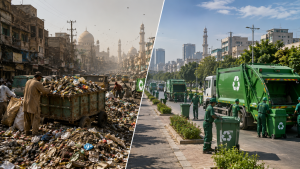
Understanding Pakistan’s Waste Management Landscape and the Road Toward a Cleaner Future
Waste management in Pakistan has become one of the country’s most significant environmental and urban development challenges. Rapid population growth, urbanization, industrial expansion, changing consumption patterns, and increasing commercial activity have all contributed to a substantial rise in municipal, industrial, healthcare, and commercial waste generation.
As cities continue to expand, municipalities and industries face increasing pressure to develop modern waste management systems capable of protecting public health, preserving the environment, and supporting sustainable economic growth. Effective waste management is no longer limited to waste collection—it now requires integrated planning, recycling infrastructure, digital monitoring, environmental awareness, and resource recovery solutions.
For more than five decades, Ghulam Hussain & Sons (GHS) has contributed to improving environmental services across Pakistan through integrated waste management, municipal operations, recycling initiatives, environmental consultancy, and sustainability-focused solutions that support millions of people nationwide.
Pakistan’s urban population continues to grow rapidly, increasing demand for efficient waste collection, transportation, recycling, and disposal systems. Residential communities, commercial centers, industrial zones, healthcare facilities, educational institutions, and tourism destinations all generate diverse waste streams that require specialized management approaches.
Without proper planning, waste accumulation can contribute to environmental pollution, blocked drainage systems, public health concerns, illegal dumping, and reduced quality of life within communities.
Although significant progress has been made across several regions, Pakistan still faces multiple operational and environmental challenges that affect waste management performance.
| Challenge | Impact |
|---|---|
| Rapid Urbanization | Higher waste generation and increased pressure on municipal services. |
| Limited Recycling Infrastructure | Valuable materials are often lost to landfill. |
| Poor Waste Segregation | Reduces recycling efficiency and increases disposal costs. |
| Illegal Dumping | Causes pollution and public health concerns. |
| Low Public Awareness | Limits community participation in recycling and responsible waste disposal. |
Modern waste management is no longer limited to collecting waste from homes and businesses. Today’s environmental systems focus on reducing waste generation, increasing recycling, recovering valuable materials, and improving operational efficiency through technology and data-driven decision-making.
Professional Solid Waste Management Services combine collection, transportation, transfer stations, recycling, monitoring systems, and environmental planning to deliver sustainable long-term results.
Digital innovation is changing how waste management systems operate across the world. GPS-enabled fleet management, GIS mapping, route optimization, digital attendance systems, complaint management platforms, and performance dashboards improve accountability while making municipal services more efficient.
These technologies help municipalities optimize collection routes, reduce fuel consumption, improve response times, and make better environmental decisions through real-time operational data.
Learn more about our Environmental Consultancy Services that support municipalities, industries, and institutions in developing smarter environmental management systems.
Recycling is becoming one of the most important components of Pakistan’s future waste management strategy. Recovering paper, plastics, metals, glass, and organic materials reduces landfill dependency while conserving natural resources and supporting a circular economy.
Innovative projects such as Pakistan’s 1st Zero Waste Recycling Facility demonstrate how structured recycling systems can transform waste into valuable resources while improving environmental sustainability.
Infrastructure alone cannot solve Pakistan’s waste management challenges. Long-term success depends on public participation, responsible waste disposal, recycling awareness, and community engagement. Schools, businesses, housing societies, industries, and local governments all have an important role in creating cleaner and healthier communities.
Environmental awareness initiatives encourage citizens to segregate waste at the source, reduce littering, support recycling programs, and adopt sustainable daily habits that contribute to improved environmental outcomes.
Programs such as the Green Office & Green School Program help organizations and educational institutions build long-term environmental awareness while encouraging responsible waste management practices.
Across Pakistan, collaboration between government organizations and experienced environmental service providers is helping modernize waste management systems. Public-private partnerships improve operational efficiency, introduce innovative technologies, strengthen accountability, and expand access to professional environmental services.
Projects delivered through municipal authorities, cantonment boards, industrial organizations, and provincial initiatives demonstrate how collaborative environmental management can significantly improve cleanliness standards and public satisfaction.
Pakistan has significant opportunities to strengthen its waste management sector through investment in recycling infrastructure, Waste-to-Value projects, smart waste management technologies, environmental education, circular economy initiatives, and resource recovery systems. These investments can improve environmental quality while creating employment opportunities and supporting sustainable economic development.
Organizations can also improve their environmental performance through regular waste audits, recycling initiatives, and customized Free Waste Assessments that identify opportunities for operational improvement and sustainability.
| Priority | Expected Benefit |
|---|---|
| Expand Recycling Infrastructure | Increase resource recovery and reduce landfill waste. |
| Promote Waste Segregation | Improve recycling efficiency and reduce contamination. |
| Adopt Smart Technologies | Improve operational efficiency and service delivery. |
| Strengthen Public Awareness | Encourage responsible environmental behavior. |
| Support Circular Economy | Reduce waste while conserving valuable resources. |
The future of waste management in Pakistan depends on innovation, collaboration, investment, and public participation. Modern waste management systems that prioritize recycling, sustainability, digital technologies, and environmental stewardship will help create cleaner cities, healthier communities, and stronger economic opportunities for future generations.
Through integrated waste management services, environmental consultancy, recycling initiatives, Waste-to-Value projects, and smart operational solutions, Ghulam Hussain & Sons remains committed to supporting Pakistan’s transition toward a cleaner, greener, and more sustainable future.
Whether you’re a municipality, industrial organization, commercial business, educational institution, or housing society, Ghulam Hussain & Sons provides reliable waste management solutions that improve environmental performance and support long-term sustainability.