
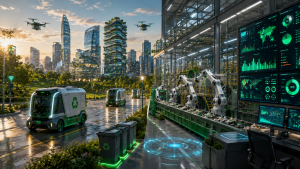
How Emerging Technologies Are Revolutionizing Sustainable Waste Management
Waste management is entering a new era driven by innovation, automation, and digital intelligence. As cities become smarter and populations continue to grow, traditional waste collection methods are no longer sufficient to meet rising environmental and operational demands. Artificial Intelligence (AI), the Internet of Things (IoT), data analytics, and smart waste collection systems are transforming how municipalities, industries, and organizations manage waste more efficiently than ever before.
These technologies are helping reduce operational costs, improve recycling performance, optimize collection routes, minimize environmental impacts, and support cleaner, healthier, and more sustainable communities. The future of waste management is no longer about simply collecting waste—it’s about managing resources intelligently through connected systems and data-driven decision-making.
At Ghulam Hussain & Sons (GHS), innovation remains central to our environmental management approach. Through GPS fleet monitoring, GIS mapping, digital reporting, operational dashboards, and sustainability-focused planning, we continue supporting smarter waste management systems across Pakistan.
Rapid urbanization, growing waste volumes, increasing environmental regulations, and higher public expectations require waste management systems that are faster, more accurate, and more efficient. Smart technologies enable municipalities and businesses to respond to these challenges while reducing operational costs and improving environmental performance.
Modern environmental management now emphasizes prevention, recycling, resource recovery, predictive maintenance, and digital monitoring rather than relying solely on waste collection and disposal.
Artificial Intelligence enables waste management organizations to analyze operational data, predict waste generation patterns, optimize collection schedules, and improve fleet utilization. AI-powered systems continuously learn from operational performance, helping municipalities reduce costs while improving service quality.
These intelligent systems also support predictive maintenance by identifying equipment issues before they become costly operational problems.
IoT technology allows waste containers, vehicles, transfer stations, and operational systems to communicate through connected sensors. Smart bins equipped with fill-level sensors notify collection teams when servicing is required, preventing unnecessary trips while reducing fuel consumption and improving collection efficiency.
IoT also provides real-time monitoring that improves transparency and operational accountability across waste management systems.
Organizations looking to modernize environmental operations can benefit from our Environmental Consultancy Services to develop technology-driven waste management strategies.
Smart collection vehicles equipped with GPS tracking, digital navigation, and route optimization software reduce unnecessary travel distances while improving collection schedules and fuel efficiency. Municipalities can monitor fleet performance in real time, respond more quickly to operational issues, and provide more reliable public services.
Professional Solid Waste Management Services supported by digital technologies deliver cleaner communities through more efficient and environmentally responsible operations.
Digital monitoring also improves recycling by identifying recoverable materials, tracking recycling performance, and supporting resource recovery initiatives. Smart technologies strengthen circular economy systems where valuable materials remain in productive use instead of becoming landfill waste.
Projects like Pakistan’s 1st Zero Waste Recycling Facility demonstrate how innovation and recycling infrastructure work together to create more sustainable environmental outcomes.
Machine Learning is helping waste management systems become increasingly intelligent by analyzing historical and real-time data to predict waste generation, seasonal demand, equipment maintenance requirements, and collection patterns. Predictive analytics allows municipalities and businesses to allocate resources more effectively while minimizing operational disruptions.
By anticipating future requirements rather than simply reacting to problems, organizations can improve service quality, reduce operating expenses, and strengthen environmental performance.
While emerging technologies offer tremendous opportunities, successful implementation requires careful planning, investment, skilled personnel, digital infrastructure, and continuous system maintenance. Organizations should adopt technologies that match their operational requirements while ensuring scalability and long-term sustainability.
Professional guidance through Environmental Consultancy Services can help municipalities, industries, and commercial organizations implement practical technology solutions that deliver measurable environmental benefits.
| Traditional Approach | Smart Approach |
|---|---|
| Fixed collection schedules | Dynamic, data-driven collection routes |
| Manual reporting | Real-time digital reporting |
| Limited operational visibility | GPS and GIS monitoring |
| Reactive maintenance | Predictive maintenance using AI |
| Minimal performance tracking | Live dashboards and analytics |
| Landfill-focused operations | Resource recovery and circular economy |
Pakistan has an opportunity to modernize its environmental infrastructure by investing in AI-powered waste management, IoT-enabled monitoring systems, digital fleet management, recycling infrastructure, and sustainability-focused planning. As cities continue to expand, these technologies will become increasingly important for maintaining clean, efficient, and environmentally responsible communities.
Organizations can begin their digital transformation through a Free Waste Assessment to identify opportunities for improving operational efficiency and adopting smarter environmental solutions.
The future of waste management will be defined by innovation, connectivity, automation, and sustainability. AI, IoT, predictive analytics, and smart monitoring technologies will continue transforming the way municipalities, industries, businesses, and communities manage waste. Organizations that embrace these innovations today will be better prepared to improve operational performance while supporting long-term environmental sustainability.
Through integrated waste management, digital monitoring, environmental consultancy, recycling initiatives, and smart operational planning, Ghulam Hussain & Sons remains committed to helping Pakistan build a cleaner, smarter, and more sustainable future.
Discover how Ghulam Hussain & Sons can help your organization adopt smart waste management technologies, improve recycling, optimize operations, and achieve long-term sustainability goals.